Active Vocabulary General and Academic Words - Amy E. Olsen 2013
Chapter 4 Word Parts I
Part 1 General Words
Look for words with these prefixes, roots, and/or suffixes as you work through this book. You may have already seen some of _ them, and you will see others in later chapters. Learning basic word parts can help you figure out thi meanings of unfamiliar words.
prefix: a word part added to the beginning of a word that changes the meaning of the root
root: a word's basic part with its essential meaning
suffix: a word part added to the end of a word; indicates the part of speech
Word Part |
Meaning |
Examples and Definitions |
Prefixes am- |
love |
amorous: being in love amateur: a person who does something for the love of it without getting paid |
eu- |
good, well |
euphoria: a feeling of extreme well-being eulogy: a speech that says good things about a person |
omni- |
all |
omnipresent: present at all places omniscient: knowing all |
Roots -cis- |
to cut |
precise: accurate; to the point; cut short incisive: cutting; penetrating |
-cla-, -clo-, -clu- |
shut, close |
claustrophobia: fear of closed spaces conclude: to shut; finish |
-fin- |
end, limit |
finalist: a person allowed to compete at the end of a contest finite: having an end or limit |
-mis-, -mit- |
to send |
emissary: a person sent on a mission transmit: to send across |
-ple- |
to fill |
implement: to apply so as to ensure the fulfillment of supplement: to fill in for a shortage |
Suffixes -ary (makes an adjective) |
pertaining to or connected with |
mercenary: pertaining to selfishness sedentary: connected with inactivity |
-ify, -fy (makes a verb) |
to make |
modify: to make a change clarify: to make clear |
Self-Tests
1 Read each definition, and choose the appropriate word from the list below. Use each word once. The meaning of the word part is underlined to help you make the connection. Refer to the Word Parts list if you need help.
Vocabulary list
ordinary
concise
complement
infinite
eulogy
amorously
dismiss
omnipotent
magnify
exclude
1. in a manner filled with love ...
2. to send away ...
3. pertaining to the everyday ...
4. brief, cut short ...
5. to shut others out ...
6. to make bigger ...
7. to fill out or make whole ...
8. a speech about a person's good qualities, usually given after a person dies ...
9. endless ...
10. allpowerful ...
2 Finish the sentences with the meaning of each word part. Use each meaning once. The word part is underlined to help you make the connection.
Vocabulary list
all
love
fill
sent
connected with
cut
end
shut
make
good
1. My boyfriend used the euphemistic phrase "exploring options" to explain why we should break up; he wanted it to sound like a(n) ...thing.
2. An auxiliary group is ... another group to give support.
3. When the bank foreclosed on the business, its doors were ... forever.
4. An amateur plays a sport for the ... of it.
5. Scissors are used to ... paper.
6. The omniscient narrator in the novel knew what was happening to ... the characters.
7. The lover ... a missive the day after the fight asking for forgiveness.
8. To complete the form, you need to ... in all of the information about your past medical treatments.
9. If you clarify something, you ... it easier to understand.
10. A definitive answer would put a(n) ... to a question.
3 Finish the story using the word parts. Use each word part once. Your knowledge of word parts, as well as the context clues, will help you create the correct words. If you do not understand the meaning of a word you have made, check your dictionary for the definition or to see whether the word exists.
Word parts list
eu
du
ple
ary
cis
fin
ify
mit
am
omni
An Adventure
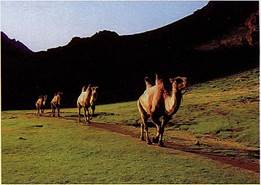
I am usually a sedent(1)... person, but a friend of mine convinced me to take a combination hiking and camel-trekking trip with her. Due to various circumstances, the time seemed right to try something new. It was near my thirtieth birthday, and signs of my growing older seemed (2)... present, so I figured "why not." I was also looking for se(3)...sion and peace in a natural setting away from my big-city life.
I thought I might have to ver (4)... my sanity when I first saw the line of camels approaching. I was going to ride one of those? The first day, however, was great. The guide was very (5)...iable, and he said I was riding like I had been doing it since I was born. I was possibly getting a little too confident. My (6)...phoria disappeared near the end of day three when I fell off my camel with a big thud. I skinned my left knee and elbow. Luckily, I wasn't hurt worse. The guide cleaned my wounds and tried to assure me that I would be fine.
I wasn't feeling confident about continuing the next day, but our guide had an idea. He grabbed a knife to im(7)...ment his plan, which scared me for a minute. However, he used it to
make two small in(8)...ions in my saddle and wrapped a piece of rope through them to make a seatbelt for me. He said I could use it until I got my confidence back. My friend said she would also be trans(9)...ting positive thoughts to me. She must have sent a lot of good feelings my way because by the afternoon I undid my seatbelt. The rest of the trip was wonderful! I'm de(10)...itely going to spend the rest of my life having more adventures and seeing new places.
4 Pick the best definition for each underlined word using your knowledge of word parts. Circle the word part in each of the underlined words.
a. cutting; penetrating
b. to make invalid
c. limit
d. eating all kinds of food
e. a good or painless death
f. filled with love
g. excess; fullness
h. a person closed off from others
i. pertaining to the power to judge
j. to send or happen irregularly
1. My cousin is a recluse who lives in the woods and only goes to town twice a year.
2. Euthanasia is a controversial subject; it can be hard to decide when to end a life.
3. The lawyer's questions were so incisive that the defendant was unable to hide what happened at the murder scene.
4. Omnivorous eaters can satisfy their hunger with plants or animals.
5. Yasmin's intermittent letters left us wondering what she was doing in the months she didn't write us.
6. My teacher said to confine my research paper to eight pages.
7. As soon as she saw the puppy, the little girl hugged it and became enamored of it.
8. After my mother died, my father decided to nullify his will and create a new one naming his children as his beneficiaries.
9. Once the trunk was bursting, I assured my wife that is was time to leave the mall as we had a plethora of gifts for two children.
10. My dad made the arbitrary decision that I should be home from a date by nine o'clock.
5 A good way to remember word parts is to pick one word that uses a word part and understand how that word part functions in the word. Then you can apply that meaning to other words that have the same word part. Use the following words to help you match the word part to its meaning.
Set One
1. am-: amorous, amiable, amateur a. to fill
2. -pie-: implement, complement, complete b. to send
3. eu-: euphoria, euphemism, eulogy c. love
4. -mis-, -mit-: emissary, transmit, intermittent d. good, well
5. -ary: mercenary, arbitrary, emissary e. pertaining to or connected with
Set Two
6. -fin-: finalist, affinity, confine f. to make
7. omni-: omniscient, omnipresent, omnipotent g. to cut
8. -cis-: incisive, concise, scissors h. end, limit
9. -cla-, -do-, -clu-: claustrophobia, enclose, seclude i. all
10. -ify, -fy: modify, magnify, exemplify j. shut, close
Interactive Exercise
Use the dictionary to find a word you don't know that uses each word part listed below. Write the meaning of the word part, the word, and the definition. If your dictionary has the etymology (history) of the word, see how the word part relates to the meaning, and write the etymology after the definition.
Word Part |
Meaning |
Word |
Definition and Etymology |
Example: -fin- |
end, limit |
finial |
a small ending ornament at the top of a gable, arch, spire, or other object Latin “finis", meaning end |
1.am- |
|||
2.eu- |
|||
3.omni- |
|||
4.-clo- |
|||
5.-fin |

Etymologies
An etymology is the history of 9 word. Some dictionaries, usually at the end of an entry; will tell how the word came into existence. There are several ways words are developed, such as being made up, coming from a person's name, or evolving over time from foreign languages. Reading a word's etymology can sometimes help you remember the meaning. For example, the word addict comes from the Latin addictus, which meant someone given to another as a slave. This history helps to show how being addicted to something is being a slave to it. Not all words have interesting histories, but taking the time to read an etymology can be useful. If you get excited about word origins, there are books available on the subject that show how fascinating words can be.

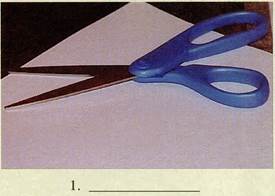
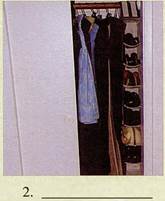
Match each photograph to one of the word parts below, and write the meaning of the word part.
am-
-cis-
-cla-/-clo-/-clu-
-ple-
-ary

Internet Activity: Creating a Blog
You can use the Internet to develop your vocabulary by writing e-mails to classmates or friends that contain the vocabulary words or get several class members to agree on a time to be on the Internet and instant message each other to feel like you are using ^e words in a conversation. You can also explore the world of Web logs, or blogs for short.
In the last few years, blogs have become increasingly popular. A blog is an online journal. It is a Web site where you can express your thoughts on whatever interests you: sports, politics, music. Other people on the Web can read your blog, make comments back to you, and link your site to theirs. A blog gives you a chance to express your opinions, share your creative writing, or find others with similar interests. You can also add photographs and create links to Web sites you enjoy.
Starting a blog is easy. Try blogger.com or LiveJoumal.com to get started; both are free services. You can even create a group blog, so you can get several classmates or the whole class involved. Just go through the steps listed on the site, and you can be blogging in five minutes. Make a conscious effort to use the week's vocabulary words in your blog. To make comments to each other, again using the vocabulary words, get the addresses of at least two other students' blogs.
Remember to be careful about the personal information you share on the Web. You can create a profile of yourself on your blog. Avoid giving out information such as your address and phone number and, of course, passwords. You may want to create a new e-mail address to use when you set up your blog. See Chapter 13 for information on Internet scams. Enjoy the ability to communicate with a wide audience, but be alert for those who want to abuse the power of the Internet.