How to write and publish a scientific paper - Barbara Gastel, Robert A. Day 2022
During the interview
How to work with the media
Other topics in scientific communication
When interviewed, try to word your responses in ways directly suitable for the reporter’s audience. For example, use mainly simple, common language, define technical terms, and relate what you say to familiar concepts (for instance, by providing analogies). Consider presenting the information as you would to a nonscientist neighbor or a bright high school student. Suiting the material to the audience minimizes the need for the reporter to “translate,” and thus decreases the chance of error. It also gives the reporter quotable content or sound bites.
Try to present information accessibly, but without condescension. Avoid thinking of “watering things down,” which tends to yield indigestible bits in an insipid broth. Rather, think of “building bridges” between what you will present and what the audience already knows and cares about. Consider using techniques presented in Chapter 26, “How to Write for the Public,” to present your content clearly and engagingly.
If you have key points to convey, make them even if the reporter does not ask. You may be able to do so by tactfully reframing a question. (“That’s an interesting idea, but actually the issue we were studying was.…”) Alternatively, you can add points at the end of an answer or the end of the interview. Also, if you have photographs or other visuals that might enhance the story, inform the reporter, even if not asked.
Stay focused during the interview. In particular, do not make offhand remarks that you would not want published.
Consider checking the reporter’s understanding. For instance, you can say, “I’m not sure I’ve presented this concept clearly. Perhaps you could explain it back to me so I can check.” Then, if a misunderstanding has occurred, you can provide clarification.
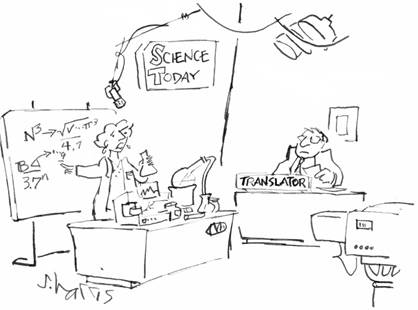
(ScienceCartoonsPlus.com)
Before the interview ends, encourage the reporter to contact you if questions arise while writing the story. You may also offer to review part or all of the story for technical accuracy. Traditionally, journalists have not shown drafts to their sources for fear of being pressured to change content inappropriately. Some journalists, however, welcome such review when writing about technical topics. Limit any suggested changes to matters of technical accuracy. The writing style is the writer’s and editor’s domain.