College essays that made a difference - Princeton Review 2010
Audrey Nath
The applicants
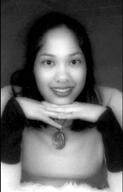
Audrey won first place in the Texas Music Teachers Association’s High School Division Piano Concerto Contest her senior year and placed at the state level the three previous years; she also performed with numerous orchestras. She was captain of her high school’s Academic Challenge B Team, salutatorian of her graduating class, and a National AP Scholar. She conducted scientific research the summer following her junior year of high school on the gold-labeling of the nicotinic acetylcholine receptor and cervical cancer detection using fluorescence spectroscopy.
Stats
SAT: 1550 (760 Critical Reading, 790 Math)
SAT Subject Test(s): 800 Math Level 2, 730 Biology, 750 Chemistry
High School GPA: 6.62/6.00
High School: Memorial High School, Houston, TX
Hometown: Houston, TX
Gender: Female
Race: Asian American
Applied To
Harvard College
Massachusetts Institute of Technology
Rice University
Essay
Audrey used the following essay in her application to Rice.
The quality of Rice’s academic life and the residential college system is heavily influenced by the unique life experiences and cultural traditions each student brings. What perspective do you feel that you will be able to share with others as a result of your own life experiences and background? Cite a personal experience to illustrate this. Most applicants are able to respond successfully in two to three pages.
I’ve noticed that if I stare at something and really concentrate on it, I can still see its outline after it is gone; the same goes for focusing on one sound or one word until it lingers in my mind. Four summers ago, as I felt inundated with knowledge and ideas, I centered my mind on my surroundings of art in order to comprehend the volume of artistic concepts. Such was the enrichment I gleaned from studying composition at the American Festival for the Arts during the summer before the 8th grade. The results of this experience are ingrained both in the way I view music and life itself.
On the first day of the music program, I carried myself with a shy and self-conscious demeanor into the composition room where I was initially intimidated by a roomful of people who appeared to be bigger, older, and smarter than I was; little did I know that they would later become a family of mentors to me. Within the first day, Chris, our instructor and sage leader, introduced us to the work of late 20th century composers with a discussion and analysis of pieces by John Corigliano and Tan Dun; before then, I thought classical music ended with Aaron Copland.
Over the course of eight weeks, we would write two pieces to be later performed by faculty, study theory, and analyze orchestral and chamber works. As respite from this arduous study, we would listen to whatever music we deemed “interesting.” These pieces would range from Beethoven’s last string quartets to Chris’ own soundtrack to a Civil War documentary; the dulcet sounds would both inspire us and fill the room for hours. To me, our assignments appeared impossible at the time as I had studied piano seriously for only four years; that training did not give me a fraction of the composition, theory, and literature knowledge that everyone else possessed. However, instead of allowing me to remain a confused spectator during theory lessons and discussions, Chris and the other students would explain the concepts in question. With this guidance and my fears assuaged, I eventually became comfortable enough to complete a complicated voice leading problem on my own or sight-sing in front of this group of encouraging supporters. By the end of the summer, I completed two original pieces and experienced the joy of having my own thoughts played back to me. Overall, I was exposed to a world of art that had previously seemed foreign and intimidating to me.
Even after the summer was over, Chris continued as our mentor and helped us explore our surroundings. We would take trips around town to the living art that is our city. From art festivals and museums to parks and Chris’ own neighborhood, our excursions were as enjoyable as they were intriguing. Once, when we visited a special exhibit of photography at the Fine Arts Museum, my friend and I posed as siblings as we proceeded to call Chris “Dad” in order to obtain a family discount. Even though Chris was visibly not more than ten years older than me, and the three of us had about as much ethnic diversity as the Democratic National Convention, our ploy worked swimmingly. Within the museum, our curiosity was piqued by paintings that mimicked picture frames and photographs of doorways. When Chris took us downtown to analyze the architecture of structures and buildings, the city that we thought we knew so well transformed into a forest of sculpted monoliths as the streets we wandered were an odd, one-way maze.
Following my study of composition and our adventures with Chris, the world around me became a different place. Whereas my love for music started as a means for me to grasp onto clarity of thought, it had transformed into a structured passion. No longer was music just a series of soothing sounds. Instead, music became the counterpoint of two dogs barking or the rhythm of lights blinking; music became the movement of life. I realized that there was beauty in every bit of life, from the order within chaos to the chaos itself; it was the relationship between the constantly evolving patterns that grew out of living that was beautiful. Individual relationships and events, as complicated and inexplicable as they may seem, embody beauty when put in perspective of the larger order of life. This idea is modeled by abstract musical concepts that usually seem incomprehensible until they are interpreted in the context of an underlying pattern.
Since the summer when a family of musicians took me in to learn about the world of art and life itself, my perspectives headed in a new direction. I began to see life not as rigid layers within black and white lines; rather, I could relate the complexities of relationships with my surroundings, other people, and myself to a chromatic brushstroke of sound in a Debussy string quartet or an intricate orchestration within a symphony by Berlioz. Similarly, people were no longer simply right or wrong, intelligent or dull, talented or inept; the psychology behind their actions was just as complicated as the thoughts and events that made them. As of this very moment, four years after I studied composition at the American Festival for the Arts, I can still hear the faint resonance of comrades toying with ideas on the piano and singing a tune heard from an orchestra rehearsal; such is the shadow of an experience that filled my mind so long ago.
See this page to find out where this student got in.